Our final day on Safari started early. We packed our gear while the cooking team cooked our breakfast.

I managed to sneak a few sunrise photos in while we were packing.
 We said good-bye to our outstanding cooks & handed them a nice tip. They had done a great job in often trying conditions. It was quite overcast as we set off for the crater floor. We back tracked a little from the previous day along the outside of the crater rim. There are no Giraffes in the crater because they have no acacia trees to feed on but the outside is a very different matter (below).

After a brief stop at the park gate we descended down the steep road to the crater floor. You can see from the colour of the road that volcanic soil is very rich.


We were greeted at the bottom by a small number of bull buffalo. They looked either exhausted or lazy. For all we knew, they could have spent the night fighting off one of the many lions in the crater or were simply in no rush.


The crater seemed to be alive with animals. We quickly ticked of a number of the usual suspects including an ostrich.

The other notable bird species was a family of grey crowned cranes. Mum dad & the nearly fully grown chick (the slightly scruffy looking one) were busy picking at something tasty on the ground.

The Ngorongoro conservation area isn't especially large (260 sq kms) but is home to a disproportionate number of animals thanks to the rich volcanic soil & the permanent water source, Lake Magadi. There are some 25,000 large mammals that permanently reside in this small area but this number swells dramatically when the Mara/Serengeti migrants pass through in the wet season.

There are about 4000 zebra that call the crater home. They seemed to be everywhere as they were in the heart of the Serengeti.

The wildebeest are also there in large numbers. The permanent residents didn't seem anywhere near as restless as the great herds to the north.

The crater is home to about 3000 Thompson's Gazelles. This was the first place we'd seen youngsters. Tommies are pretty small as adults but the fawns are really little.

We tracked along the Western shore of Lake Magadi. It''s mineral rice and attracts flamingos much the same as Lake Nakuru.

A little further along we stopped at a waterhole. It was very easy to spot thanks to the green plants in an around the water. The crater for the most part had long dry grass. The waterhole was ruled by hippos with no competition from crocodiles who don't live in the crater anywhere.


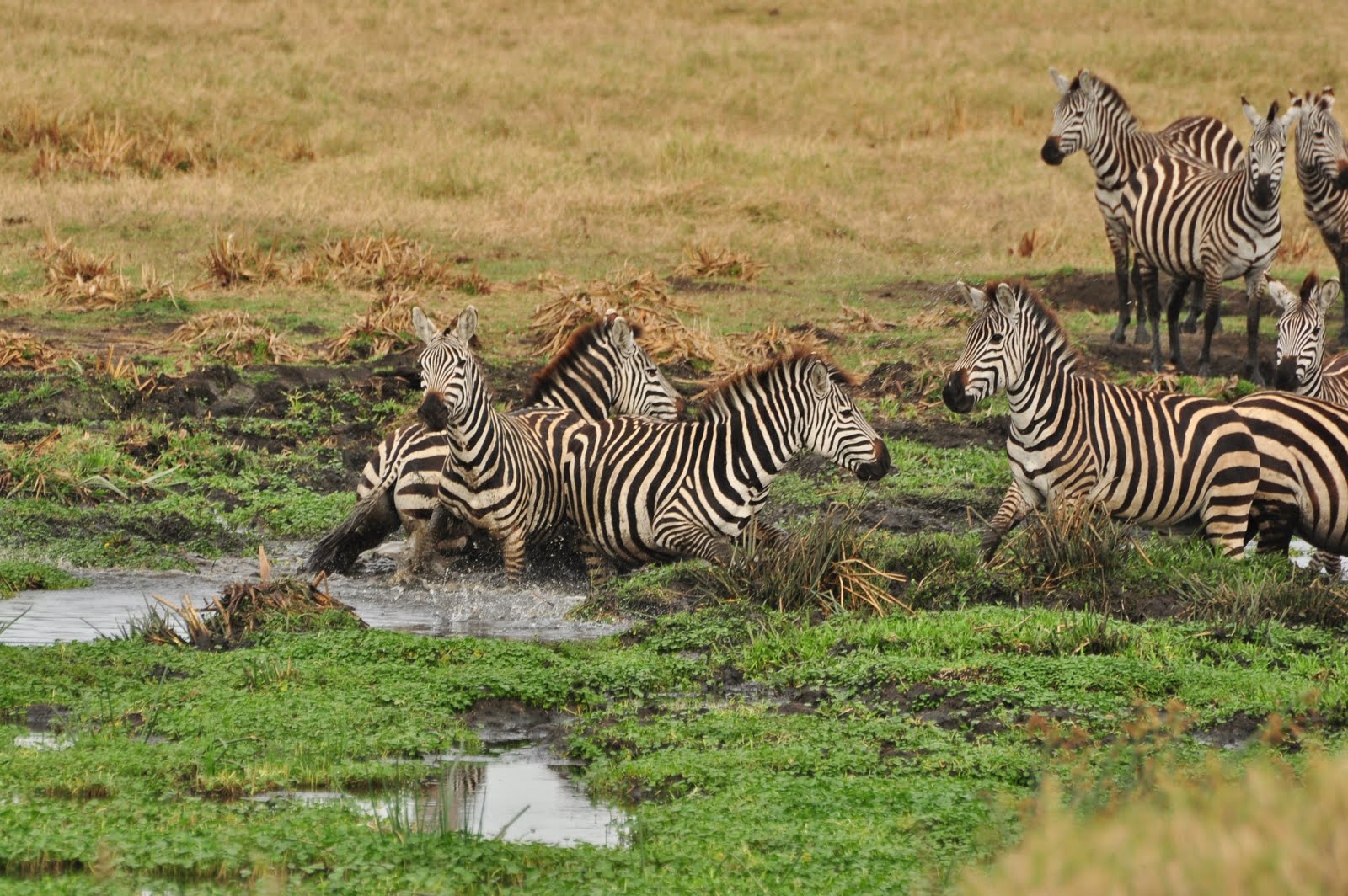
Despite the lack of crocodiles, the zebra were still nervous drinking from the waterhole. They live in a place with the highest density of lions in Africa so they are probably always nervous. Something in the water spooked them because they all scattered. It was probably a bird or something.

Further along the road we saw more zebra. This time they were doing something a little odd. They were rolling in a dust patch. They were lined up in an orderly fashion waiting their turn. Each Zebra had it's turn them moved on. It was interesting to see such social behavior from an animal I wouldn't have expected it to come from.

It took a while but we finally got to see some predators. Surprisingly the first was the Hyena. Most days they are one of the last to show themselves. With so many lions in the area, the hyenas are constantly around making a nuisance of themselves at a kill.

The other predator/scavenger that had proven to be elusive was the jackal. We'd seen the one in the Mara when it was quiet dark, but not since. This time a heavily pregnant golden jackal was trotting along beside the car going about her business. It's uncanny how much they look like the coyotes in the Americas. Jackals fill the very same niche in Africa.


A little further along at a junction we were greeted by four black-backed Jackal pups. They had a den right at the crossroads & were busy running around exploring and playing. Cute aren't they? Don't be fooled. They grow up to be ruthless hunters & scavengers.


Not 50m from the jackal pups was a lioness sleeping under a tree. We were a bit desensitized to lions by then but she did get up and move before laying down and nodding off again.

The trees above the lion provided an idea lookout post for a black-shouldered kite, no doubt looking for small animals in the grass.

Kori bustards seems to be everywhere & always in pairs. Remember these are the largest flying birds in Africa.

Mid morning we stopped beside a small lake that wasn't caustic lake the big lake. Consequently it was very green like the waterhole & had a healthy population of hippos. There was also a toilet block which seemed more interesting to most than the hippos.

A pair of African black kites were eating something on a nearby rock & weren't the slightest bit intimidated by us. I'd have to say they don't look that black to me. They're a striking looking raptor though.

Time for one last group photo of the group before going out in search of some more lions.


It didn't take long before we saw lions. This was an interesting scenario going on in front of us. There's a black bump to the right of the buffalo (above). It turned out to be a recently killed buffalo. The big bull in picture (above) was getting to his feet as we arrived.

There must have been a stand off going on for some hours. The buffalo wasn't going to back down from the lions but you could tell he was exhausted. You'll see a second lioness to the right of the buffalo so the odds were a tough stacked with the cats.

With one defiant half charge the lioness submitted & walk off her knoll. You can see from the photo below (if you look hard) that her head is covered in blood. The lion pride must have killed the other buffalo in the early hours of that day. We could tell by the way the survivor was walking that the lions had tagged him as well. The lioness had one last defiant taunt of the buffalo before he turned and hobbled off. The heat & the glut of food meant the big cat wasn't really that interested in another hunt.

Watching all this were two parties. To the left were two hyenas sneaking ever closer to the kill but staying just out of reach of the cats. You could see they were very nervous & rightly so. Lions are very protective of their meals.

To the right were the two pride males. Even though we were a few hundred metres away from them were could tell they were huge. Due to the abundance of food in the crater, the lions grow very large & it has caused a problem with inbreeding because any lion males from outside the crater are easily fought off by the larger residents. A jackal didn't think the lions were that big & scary.


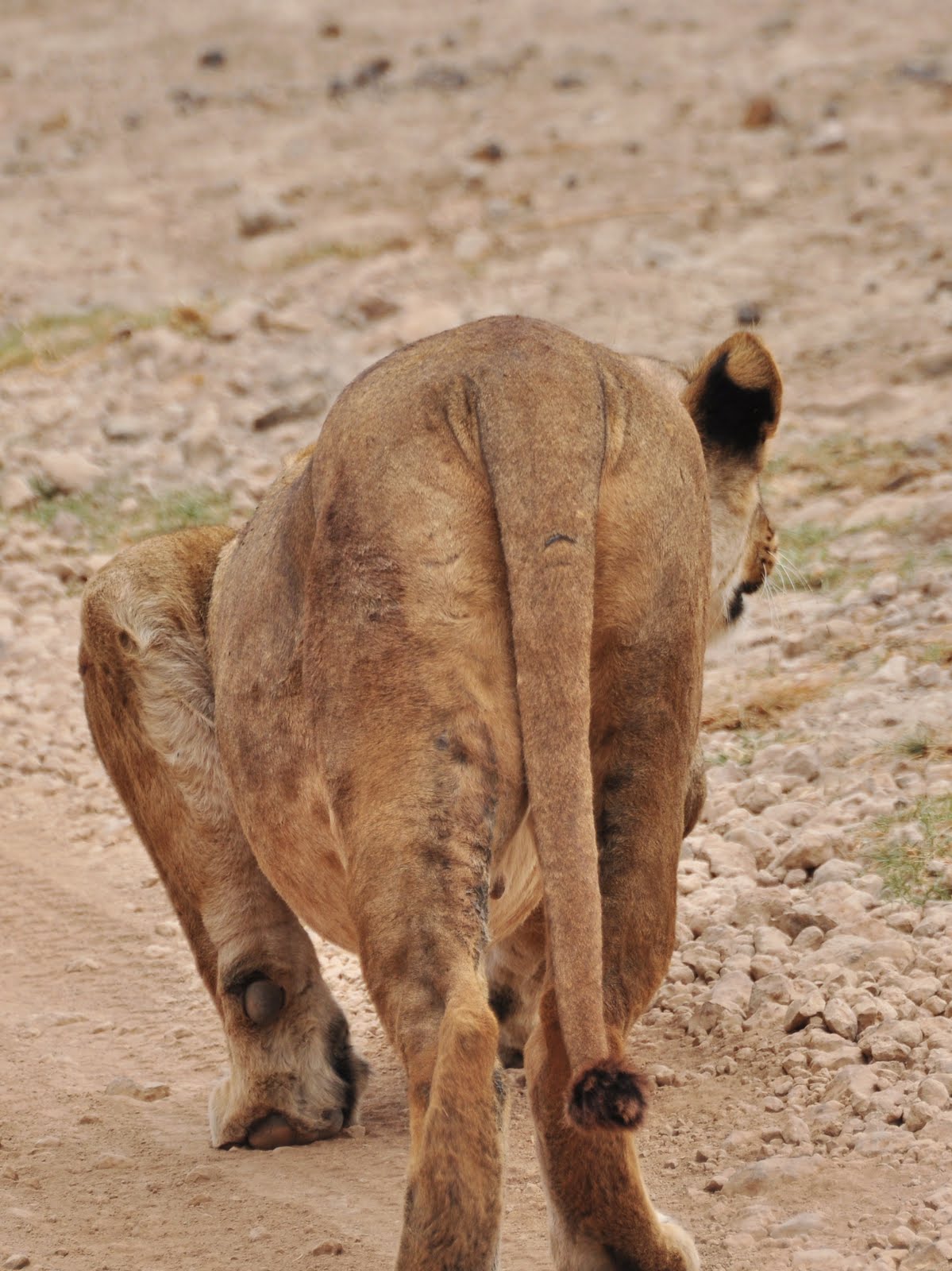
We headed back toward the small lake where we'd stopped earlier. There's a marshy area that feeds into the lake where we found two more lions. It looked to be a lioness & her teenage daughter. The old girl was missing half her lower left canine. It looked painful.


She spotted the hartebeests on the other side of the vehicle procession to her. She immediately stood up & walked toward us.

She decided that underneath the car in front of us was a nice place to stay cool & stay hidden from the antelope.

She lay there for a while scoping the situation & building the excitement in our truck. Something triggered her to go into hunting mode.


She stalked along using the gravel road shoulder as cover before, much to our disappointment, stopping & sitting up. We figured the heartbeests had spotted her so she had given up. Most of the 30 vehicles drove off but we waited for a little while.

Eventually Luis got the hurry up from Moses so we reluctantly moved on (as we thought they has too). We didn't have long until our park permit expired.
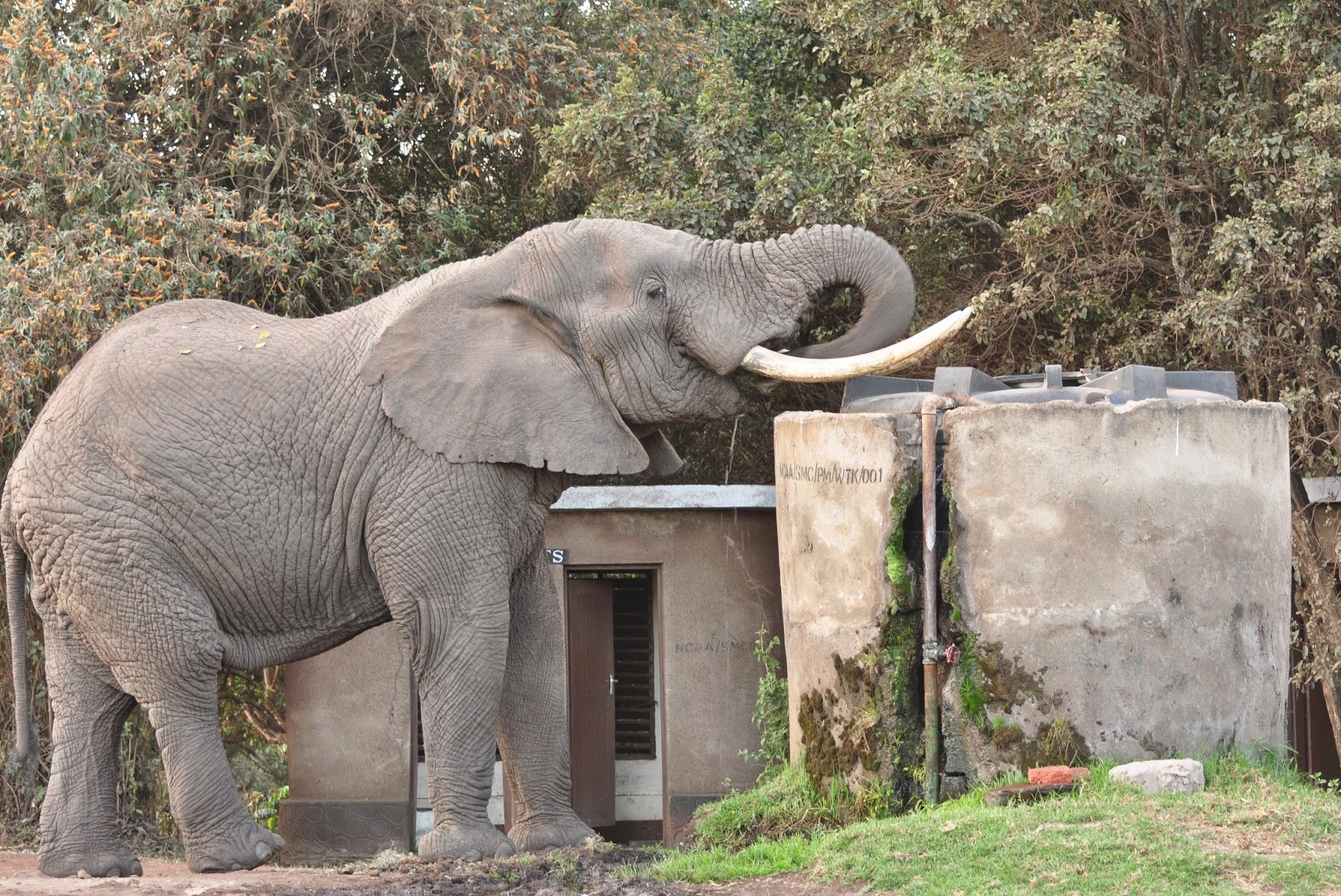
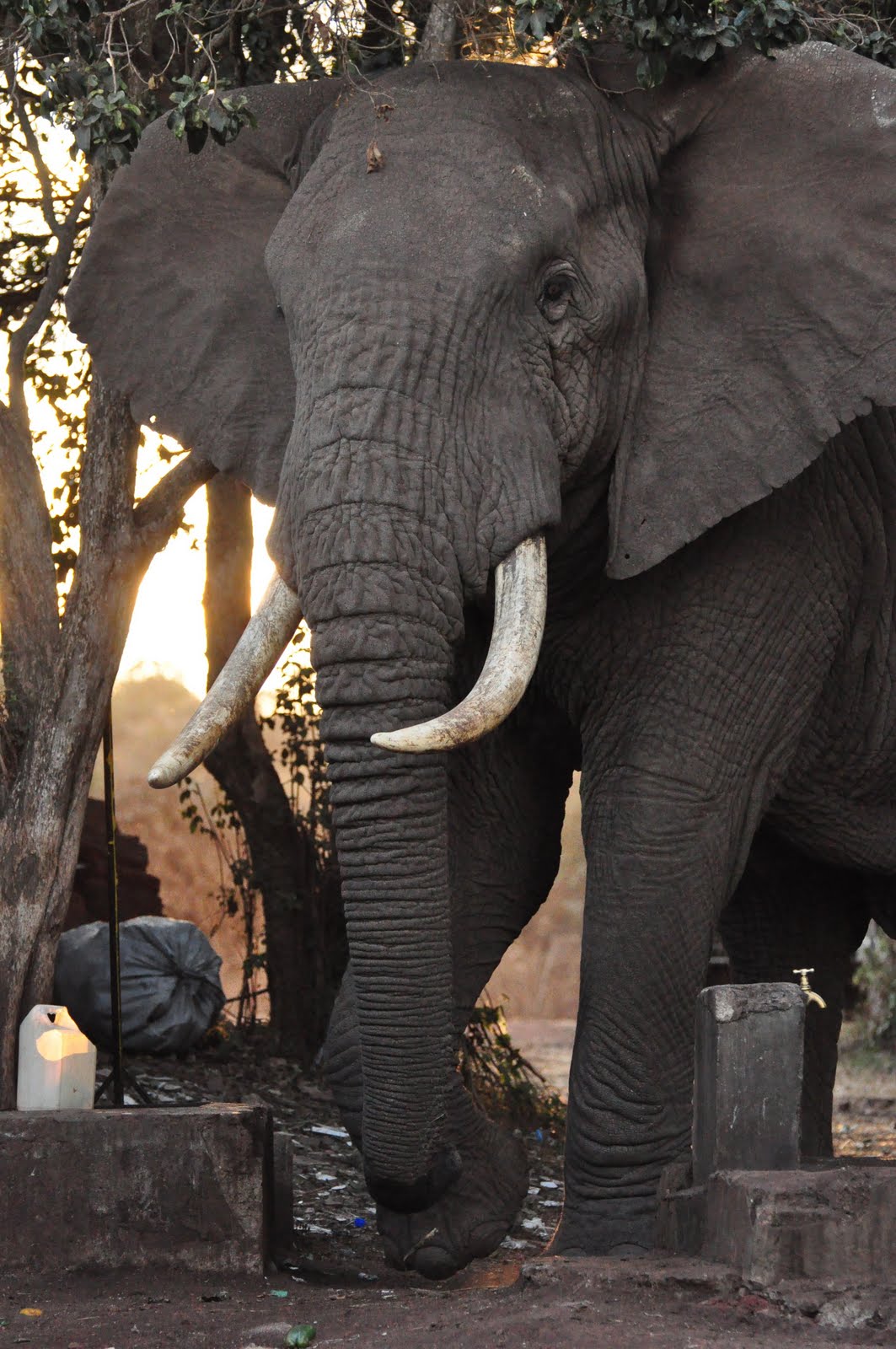
Close to the point where the road starts to climb out of the crater we spotted a bull elephant with what could only be described as mammoth tusks! The minerals in the water & plants in the crater allow the ivory in both elephants & black rhinos to grow very large. This guy was a prime example.

Next thing we know, Luis get another call over the radio from Moses telling him the lioness had just killed one of the hartebeest! We were gutted! Not only did we miss the kill but the guys in the other vehicle (that we thought were already climbing out of the crater) got to see it! That's wildlife watching for you.

We headed back to the spot to find the lioness choking the hartebeest in knee deep mud.

She looked to her daughter to come & help her drag her prize out of the mud. The right side of her face was black with mud & looked like something out of Brave Heart.
As the younger cat walked toward her mum we realized why she hadn't helped with the kill. She was limping quite badly. Pete (the vet) speculated about what type of injury is was & whether is could be part the the inbreeding problem.

We really had to go by that time & left the big cat to drag her dinner & herself out of the mud. I'm pretty sure she uses the mud to catch many of her meals. It all seemed a little too easy for her in the end.